
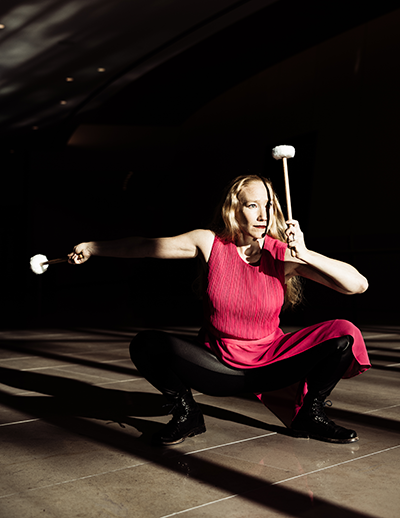
Through The Eye(s): Centering Text and the Voice in Co-Compositional Percussion Practice
Bonnie Whiting performs excerpts from Through The Eye(s). This extractable cycle of pieces for speaking/singing percussionist was co-created by musicians and writers incarcerated at the Indiana Women's Prison, composer Eliza Brown, and Whiting in 2019.
Lost in the Fog
Text: Marjorie Woods, Music: Eliza Brown
Violent Passion
Music and text: Char'Dae Avery
Who's That?
Improvisatory score and text: Dawnetta Taylor (Shelton)
HER
Music and lyrics by Lara Campbell
Emergence
Music and text by Amaris Rose Bunyard and Joyce (Potter) Hawkins
This co-compositional model was centered on texts generated by the participants, many of whom did not initially identify as musicians. Throughout a semester-long course in the IWP's pre-college program, Making Music with Percussion and the Human Voice, the group established a shared vision, settling on the theme “calm and storm” as a unifying thread. Composers worked individually and collaboratively, writing texts and setting them to music using a limited percussion setup available to them. Living with Whiting's percussion instruments plus found objects gathered in the classroom became a powerful catalyst for highly individualized creative activity. This project centers the perspectives/artistic contributions of these individuals and the collaboration functions as epistemic reparations for the injustices incarcerated people experience. While this can manifest in many ways, in the realm of arts education, creative expression becomes a space for incarcerated students to develop hermeneutic frames for their experience – that is, to shape their own narratives – and provides a platform for the creative work of incarcerated people to enter the public sphere with full authorial attribution. Looking ahead to new futures in not just percussion, but in contemporary performance and creation, Brown and Whiting challenge and transform the process and infrastructure through which a piece of music is created. The conditions of this work's production was shaped intentionally, so as to not unwittingly replicate the inequities that inhere in the field as historically structured within the carceral setting.