← Back to Artists
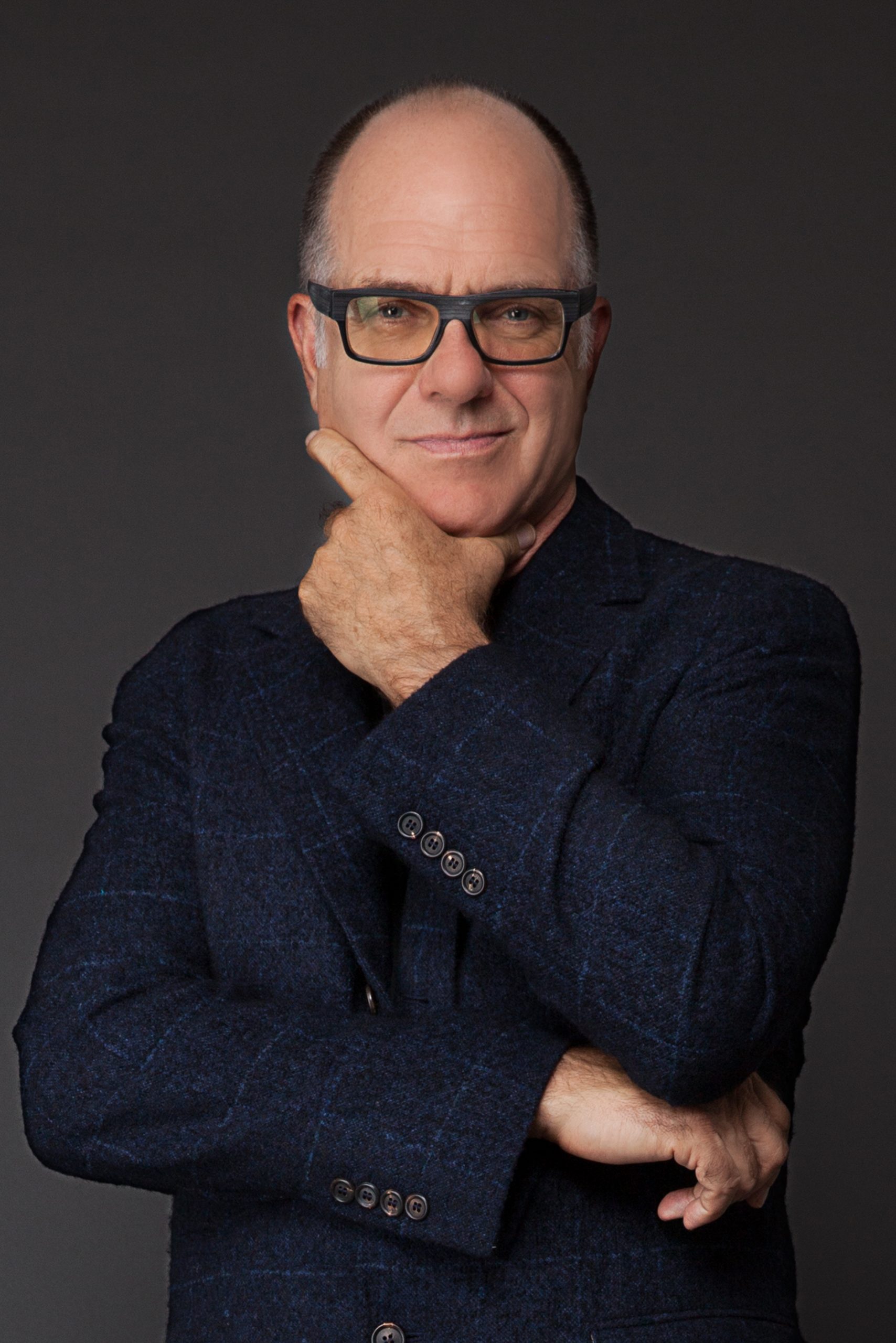
Steven Schick
Percussionist, conductor, and author Steven Schick was born in Iowa and raised in a
farming family. Hailed by Alex Ross in the New Yorker as, “one of our supreme living virtuosos,
not just of percussion but of any instrument,” he has championed contemporary percussion
music for more than fifty years. In 2014 Schick was inducted into the Percussive Arts Society
Hall of Fame.
As conductor, Schick was Music Director of the La Jolla Symphony and Artistic Director
of the San Francisco Contemporary Music Players and the Breckenridge Music Festival, and Co-
Artistic Director with Claire Chase of the Banff Centre’s Summer Classical Music program. In
2020, he was awarded the Ditson Conductor’s Award, given by Columbia University, for his
commitment to the performance of American music. In 2025, Schick was named artist-in-
residence with Monday Evening Concerts, the country’s oldest continuously operating concert
series devoted to promoting contemporary music.
Schick’s publications include a book, “The Percussionist’s Art: Same Bed, Different
Dreams,” and numerous recordings including complete collections of the percussion music of
Iannis Xenakis and the early percussion works of Karlheinz Stockhausen. His most recent
project, “Weather Systems,” a multi-part retrospective of solo percussion music released on
Islandia Music Records, was listed among the best recordings of 2023 by both The New York
Times and The New Yorker.
In 2019, he and his wife Brenda began The Brenda and Steven Schick Commissions to
foster new creative work that embraces qualities of optimism in themes dealing with
community or the environment.
Steven Schick is Distinguished Professor of Music and the inaugural holder of the Reed
Family Presidential Chair at the University of California, San Diego. In 2026 he will be awarded
an honorary Doctor of Musical Arts degree from his alma mater, the University of Iowa.
Pianist Cory Smythe has worked closely with pioneering artists in new, improvisatory, and
classical music, including saxophonist-composer Ingrid Laubrock, violinist Hilary Hahn, and
multidisciplinary composers from Anthony Braxton to Zosha Di Castri. His own music “dissolves
the lines between composition and improvisation with rigor” (Chicago Reader), and his first
record was praised by Jason Moran as “hands down one of the best solo recordings I’ve ever
heard.” Smythe has been featured at the Newport Jazz, Wien Modern, Trondheim Chamber
Music, Nordic Music Days, Approximation, Concorso Busoni, and Darmstadt festivals, as well as
at Lincoln Center’s Mostly Mozart festival, where he was recently invited to premiere new work
created in collaboration with Peter Evans and Craig Taborn. He has received commissions from
Milwaukee’s Present Music, the Banff Centre for the Arts, the Trondheim Jazz Orchestra, the
International Contemporary Ensemble, of which he is a longtime member, and the Shifting
Foundation. Smythe received a Grammy award for his work with Ms. Hahn and plays regularly
in the critically acclaimed Tyshawn Sorey Trio.
Kontakte by Karlheinz Stockhausen
New Music/Research
New Music/Research PresentsLive
At first glance, Karlheinz Stockhausen’s Kontakte, a standard work of the modernist
repertory, seems to be the antithesis of a personal and individualized practice. After all,
in many ways individualized practices have evolved as a rebuttal to the very idea of
canon, to its weight and inflexibility. Or at least that’s the way it might seem now. But
when I first learned Kontakte, now exactly 50 years ago, the piece was still relatively
new, and what it asked of its performers was both novel and frankly a little terrifying.
As a 21-year old senior at the University of Iowa I was utterly unprepared for the
questions the piece asked me to consider. What was the role of pitch and culture in
what I considered at that time to be the unpitched and culturally neutral family of
percussion instruments? How I was I to create fluid music within strict and unforgiving
limitations, in this case an inflexible rapport with fixed media? I still grapple with a
question that Jap Spek, Stockhausen’s collaborator in the creation of Kontakte, posed
to me at the time (Spek mixed the electronics in my first performance of the piece): how
does the piece react to and propose to rehabilitate the deep scars on the post-war
German psyche. Could the young Stockhausen’s attempts to regain his ethical and
spiritual footing serve as a model to an uncertain young artist from a vastly different
cultural milieu?
Grappling with these questions, in this one piece, has become the single most important
framework for me in the half-century of personal practice since April 18, 1976, when I
first played it. Beyond that, the generosity of my first duo partner, the pianist James
Avery, then twenty years my senior and a faculty member at the university, has provided
a model for my personal approach in forty-four years of university teaching.
These stories are mine and may find no resonance elsewhere. Simply put, they form the
spine of my personal practice. But in a communal sense they might be shared
guideposts for the future. Within our brief history as a contemporary art form, seeing
Kontakte as new and personal—not as settled repertory within an aging and impersonal
canon—sustains its continuing vitality and allows it to shape the lives of its future
performers.