

Tradition in Motion: The Evolution of Rudimental Drumming Through the Music of The United States Army Old Guard Fife and Drum Corps
Tradition in Motion: The Evolution of Rudimental Drumming Through the Music of The United States Army Old Guard Fife and Drum Corps
by SSG Kevin Hanrahan
Percussive Notes
Volume 64
No. 5
October
2026
The article explores the evolution of American rudimental drumming through the history of The United States Army Old Guard Fife and Drum Corps. Originally used for military communication and discipline during the Colonial and Revolutionary War periods, rudimental drumming has transformed into a sophisticated musical art form. Since its founding in 1960, the Corps has preserved Colonial-era music while continuously refining drumming techniques, arrangements, and performances. The tradition balances preservation with innovation, expanding rhythmic vocabulary and ensemble complexity without losing its historical roots. The Corps’ music and drum solos illustrate this progression, demonstrating how the tradition remains a living, evolving part of American percussion heritage. This evolution also reflects broader changes in percussion pedagogy and musical expression, ensuring that rudimental drumming continues to influence contemporary percussion styles today.
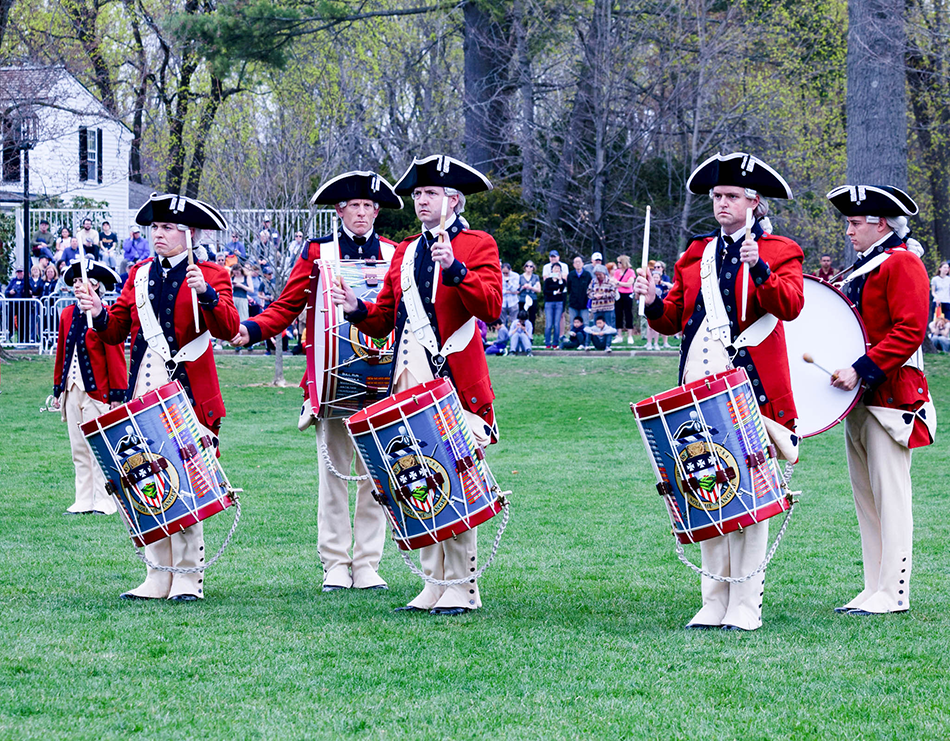
For much more than two-and-a-half centuries, rudimental drumming has been a defining voice of American military music. Long before modern percussion ensembles and marching competitions, the field drum and the fife served as tools of communication, discipline, and ceremony. As those practical functions faded, the tradition evolved both into a culture and an expressive musical art form that continues to shape drummers today.
Few organizations illustrate that evolution more clearly than The United States Army Old Guard Fife and Drum Corps. Since its founding in 1960, the Corps has preserved the music of the American Revolutionary period while continually refining its approach to rudimental drumming, arranging, and performance. Though often recognized for its Colonial uniforms and ceremonial role, the Corps represents more than six-and-a-half decades of musical growth within one of America’s oldest percussion traditions: rudimental drumming.
Our PASIC 2026 presentation explores that journey through representative works spanning the Corps’ history. By comparing full ensemble selections with drum solos from different eras, attendees will hear how rudimental vocabulary, arranging techniques, and performance practices have developed while remaining rooted in centuries-old musical principles. More importantly, the session asks why these changes occurred and what they reveal about the broader story of American rudimental drumming.
The roots of that story predate the nation itself. During the Colonial era and the Revolutionary War, fifers and drummers communicated commands across camps and battlefields through standardized calls. These signals regulated daily military life and troop movements, creating a rhythmic language that was both practical and indispensable.
Even within those functional responsibilities, drumming became an art. Military musicians developed technical proficiency through rudiments — fundamental sticking patterns that formed a shared musical vocabulary. Many of these rudiments remain central to percussion education today, linking modern performers to generations of military musicians.
As battlefield signaling became obsolete due to advancements in how warfare is conducted, rudimental drumming found new purpose in ceremonial performance and recreation. When The U.S. Army Old Guard Fife and Drum Corps was established in 1960, the Corps was charged not simply with recreating Colonial music, but with presenting it at the highest level for state arrivals at the White House, Presidential inaugurations, national ceremonies, diplomatic events, and representing the United States people and Army through music on world stages. That mission continues to shape its musical identity.
The Corps’ earliest arrangements reflected both the available historical sources and the performance practices of the era. Rudimental writing emphasized clarity, precision, and faithful interpretation of traditional military repertoire, providing audiences with a direct connection to earlier generations of American military musicians.
As the decades progressed, the percussion world changed dramatically. The rise of Drum Corps International, Winter Guard International, collegiate percussion programs, and organizations such as the PAS fostered an unprecedented exchange of ideas among percussionists. As musicians from increasingly diverse backgrounds joined the Corps, its repertoire evolved naturally alongside the broader percussion community.
Successive generations of Corps arrangers respected the historical framework while steadily expanding its expressive potential. New works introduced greater rhythmic sophistication, richer ensemble writing, and increased technical demands — not simply to showcase virtuosity, but to communicate the energy and artistry of America’s military musical heritage to contemporary audiences.
The Corps’ drum solos provide perhaps the clearest record of that evolution. Earlier works emphasized clean execution of traditional rudiments and balanced musical architecture. Later solos introduced broader rhythmic vocabulary, and more intricate phrasing, counterpoint, and greater technical demands while remaining grounded in the rudimental language that defines the tradition.
Viewed side by side, these solos reveal far more than increasing difficulty. They reflect changing artistic priorities, evolving pedagogical approaches, and the continuing dialogue between preservation and innovation that has shaped rudimental drumming for generations.
The full ensemble repertoire tells a similar story. As the Corps’ music matured, the relationship between fifes, bugles, and drums became increasingly sophisticated. Rather than functioning solely as accompaniment, the percussion writing emerged as an equal musical voice, using counter-rhythms, dynamic shaping, thematic development, and carefully crafted textures to enrich the ensemble while remaining rooted in historical style.
This progression demonstrates one of tradition’s greatest strengths: its ability to remain alive. Musical traditions endure not because they remain unchanged, but because each generation studies its foundations and contributes thoughtfully to its continued development.
The Corps’ history offers lessons that extend well beyond military music. Rudimental drumming remains an exceptional vehicle for developing technical consistency, rhythmic precision, and musical expression. More importantly, it reminds students that technique exists to serve musical communication, not the other way around.
Likewise, composers and arrangers can draw inspiration from the Corps’ repertoire by observing how traditional vocabulary continues to generate fresh musical ideas. The enduring strength of rudimental drumming lies not in constant invention, but in the creative application of timeless musical principles.
As percussionists gain access to an ever-expanding range of musical styles, America’s rudimental tradition continues to provide an important historical foundation. Its influence can still be heard across concert percussion, marching ensembles, and contemporary drumline writing.
Our PASIC presentation brings this story to life through live performance, tracing more than six decades of the Corps’ musical development. By comparing representative works from different eras — including full Corps selections and solo repertoire — we hope to provide listeners with a deeper appreciation for how one ensemble has preserved a historic tradition while continually refining its artistic voice.
Whether attending the session or simply reflecting on the heritage of American rudimental drumming, percussionists can recognize the remarkable continuity connecting today’s performers with those who came before them. Every flam, drag, ratamacue, and roll reflects a tradition shaped by generations of military musicians. The United States Army Old Guard Fife and Drum Corps continues that tradition — not by preserving it unchanged, but by ensuring it remains a living part of American percussion.
Staff Sergeant Kevin Hanrahan is a bass drummer with the United States Army Old Guard Fife and Drum Corps, the Army’s premier ceremonial field music ensemble. In addition to his performance duties, he is a member of the Corps’ Center for Martial Music (CMM), which serves as the unit’s library, archives, and history center. Outside of his military service, SSG Hanrahan is an active participant in the civilian fife and drum community and performs as a snare drummer with The Grand Republic Fife and Drum Corps of Framingham, Mass.