
New Music/Research: Percussion in the Personal: Highlighting Individualized Practices
New Music/Research: Percussion in the Personal: Highlighting Individualized Practices
by Dustin Donahue, Michael Jones, and Reed Puleo
Percussive Notes
Volume 64
No. 5
October
2026
The article from Percussive Notes explores the dynamic landscape of new and contemporary percussion music, emphasizing the importance of individual practices. It highlights the PASIC 2026 New Music/Research Day, which showcases personalized percussion works across five concerts focusing on composer-performers, generative practices, advocacy, collaborative relationships, and stewardship of percussion traditions. The featured artists blend cultural influences, experiment with instrument design and performance techniques, and use percussion as a medium for social and environmental commentary. This reflects the ongoing evolution of percussion as both a personal and collective art form rooted in diverse traditions and contemporary innovation.
In 2026, percussionists working in new and contemporary music inhabit a world that would be unrecognizable to the progenitors of the practice 100 years ago. Today we enjoy a robust and institutionalized culture, complete with standard repertory, comprehensive method books, and media to consume. In other words, there has never been an easier time in our history to look for models of what it means to be a percussionist in an institutionalized context, whatever one’s generic interest might be. However, it is easy to forget that the infrastructure we enjoy today was borne out and developed from the uncertain efforts of individual people, for whom there were very few models to glean a sense of what “percussion” even was.
The PASIC 2026 New Music/Research Day on Thursday, Nov. 11, seeks to pay homage to the energies and investments of individual practices that have become our contemporary models, and looks to see what new and divergent models might be manifesting today.
9:00 a.m. THE COMPOSER-PERFORMER
The first concert explores how personal practices evolve when percussionists compose for themselves. It is perhaps this modality, the composer-performer, which most purports to give direct access to the personality behind the work. At all stages, the work is shaped by the individual touch of the person bringing it to being: from conception, to execution, to performance. These performers furthermore serve as a kind of translator or ambassador of their respective traditions, refracted by the personal orientations and desires of a specific member.
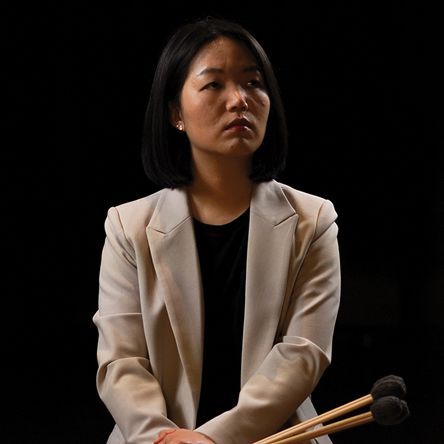
In “3Do”(2025), YoungKyoung Lee attempts a synthesis of the Samdo Garak (a traditional Korean percussion suite integrating regional rhythms from the Jeolla, Gyeongsang, and Chungcheong provinces) with a Western concert paradigm. While this music is typically performed on Korean percussion instruments (the Janggu, Kkwaenggwari, Buk, and Jing), Lee instead scores them for a conventional Western percussion setup in an effort to expand the music’s “technical vocabulary” while still preserving its “essential breath.”
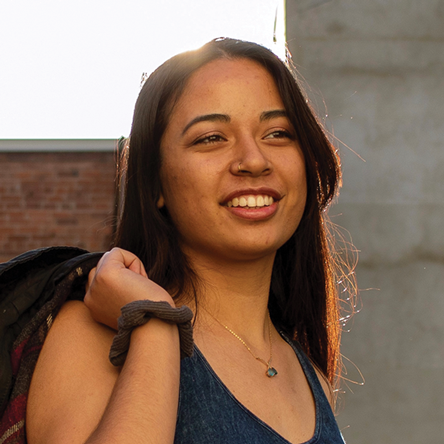
Cahaya Drucilla’s “rich feet”(2025) is a multimedia work that reflects on contemporary problems of neo-colonialism, climate catastrophe, and capitalist imperialism. This commentary extends from Drucilla’s positionality: a Balinese-American artist existing within a sensationalist American media sphere, looking from afar towards her loved ones living in exploited lands.
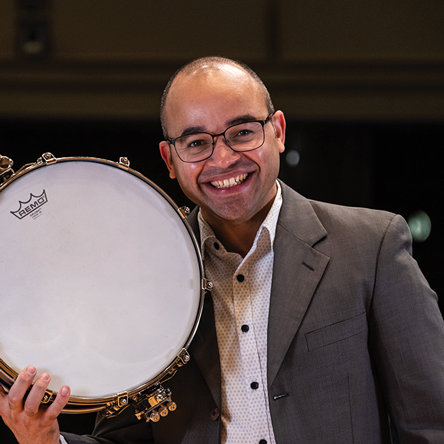
Jean Carlo Ureña Gonzalez’s “Joyao”(2026) is an homage to the Dominican guïra, its players (particularly Rafael “Yapo” Martínez Germán), and the communities it brings together. “Joyao” refers to the syncopated güira pattern that emphasizes the first partial of every beat, giving the merengue rhythm “groundedness and depth.” He hopes his work will inspire similar interest in the guïra and Dominican music more broadly.
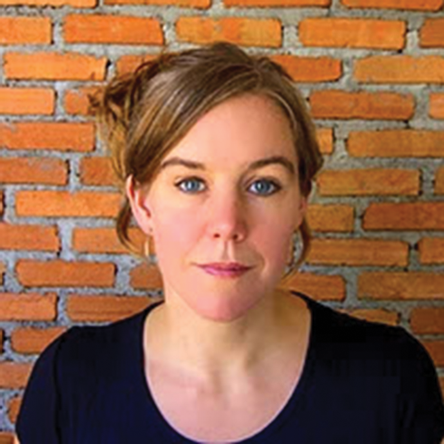
Gina Ryan’s “Butterfly Gardens” (“Jardin de papillons”) (2026) is a work situated within her ongoing research-creation practice, which she terms “music as social action.” The piece is inspired by the ecological gesture of allowing dead leaves to remain on the ground (and thus serve as shelter/nutrient to the nonhuman), rather than be raked, bagged, and discarded. Ryan imagines a “world of sound” that is, in her words, “made up of layers, accumulations, and resonances, like a rich tapestry of dead leaves.”
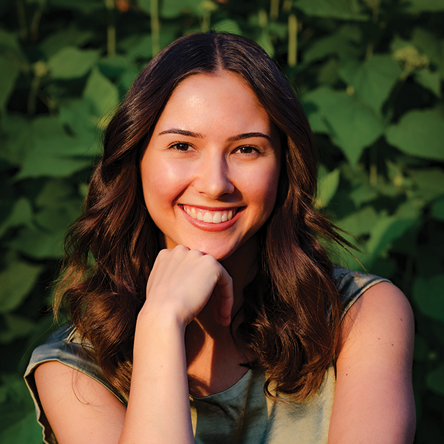
Brianna Maltais’s work takes the tradition of tap dance and positions it speculatively, asking the fascinating questions: “What if tap had developed its own instrumentation alongside the modern drumkit, and how might this have shaped its role in music and dance today?” and “What happens when we approach tap not only as dance, but as an evolving instrument?” Her work (both of the invention of the “tap kit” and its performance) not only looks to the future of this art form, but also seeks to recover an alternative historical trajectory in which tap dance enjoyed the full evolution that the drum kit did in the previous century.
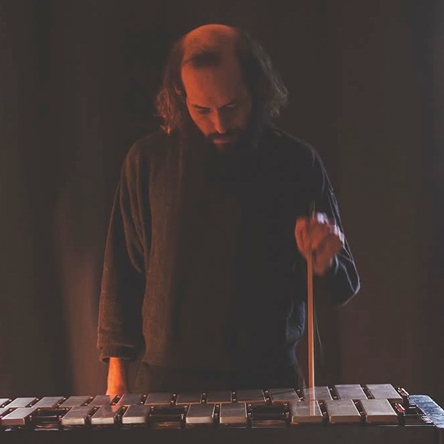
Adam Lion’s “When a Line Bends”is a “repetition-driven study on the relationships between material, space, and performer.” Centered on the vibraphone, various modes of activation and resultant acoustic phenomena commingle to create “scintillating clouds of rhythm [which] explode into space as bars are struck, scraped, and touched.” This work is a part of a larger project by Lion, which explores the vibraphone as an instrument both situated within experimental music practices, but also in dialogue with contemporary theoretical debates on the “creation of structure through chance, cohesion through independence, and the borderlands between the raw materiality of sound and human cognition.”
11:00 a.m. GENERATORS
The second concert explores the idea of a personal practice as a kind of language one develops over the course of a career. In what ways do performers encounter or develop idioms that become recurring themes and techniques in their work, and how do they move from a general first encounter to a highly specific generative practice? Through composition, performance, and instrument/medium specific techniques, the performances on this program showcase the ways the personal becomes idiomatic.
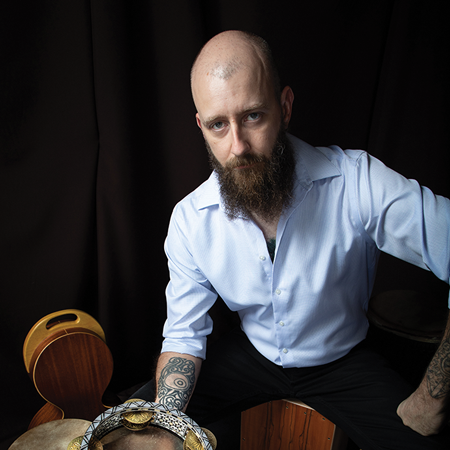
A musician comfortable across many genres, T.J. Troy presents an original work titled “Build/Rebuild” for his own hybrid drumset. The work combines elements from his experience performing non-Western and experimental music in different contexts. Drawing from North Indian, Flamenco, and Arabic techniques, the work moves between groove settings and pre-composed sections.
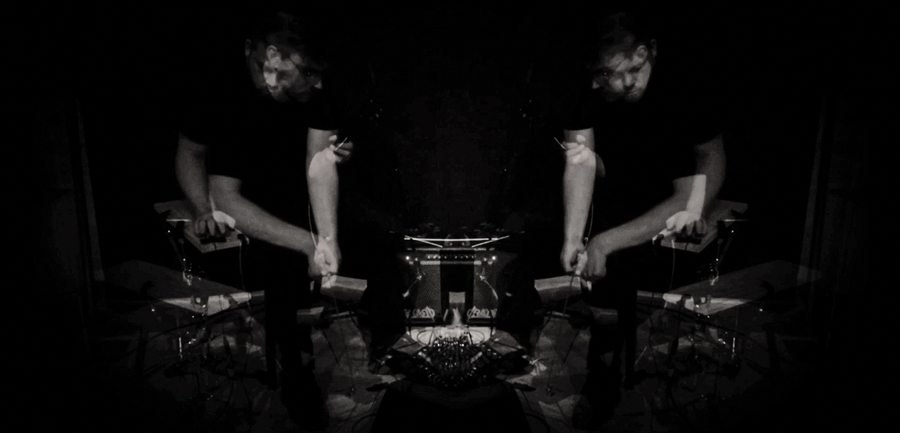
Electronic/acoustic percussion duo low pass(Rob Cosgrove and Taylor Long) performs a work conceived by Cosgrove specifically for the duo. “Stations” is an iterative multi-channel broadcast feedback project using different formations of snare drums and radios. Repurposing radios as feedback instruments, the work manipulates and spatializes the sound of the snare drums in a dynamic, teeming, structured improvisation. The proximity, angle, and formation of the sounding objects on stage create new textures and drones for the duo to interact with.
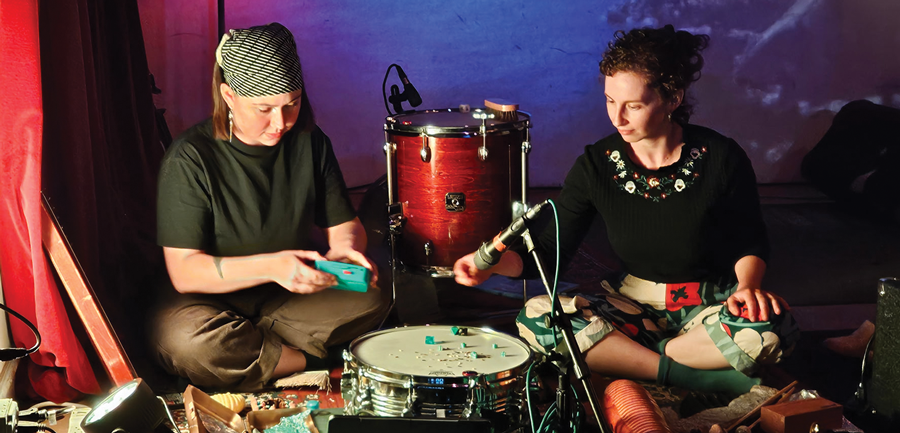
Original work “game: sound balm” is a playful and intimate sound art performance that follows (and breaks) the rules of a dice-based game. Performed by Rose Martin and Sophie Chin (Dream Balm), the piece draws on experiences with percussion, piano, voice, teaching, caretaking, mythology, politics, social engagement, and improvisation. The work was developed through a process of rule development and play, utilizing found sounds within a collection of sonic objects.
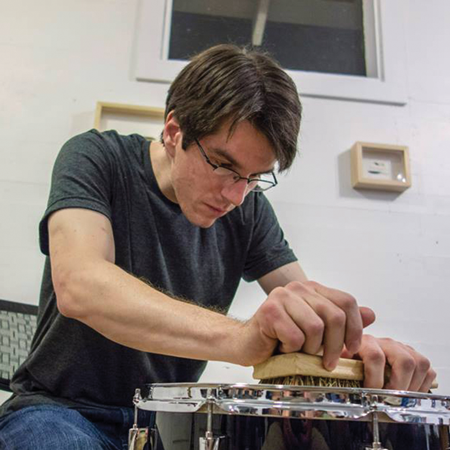
Percussionist and sound artist Tim Feeney utilizes field recordings from the 2025 Los Angeles wildfires to create a sound collage in his piece “A matter of intent.” His practice focused on sensory ethnography investigates a cultural moment sonically from his own perspective. Amplifying these recordings through small instruments and natural objects, he marks a real point in time noting the forthcoming dangers of climate change.
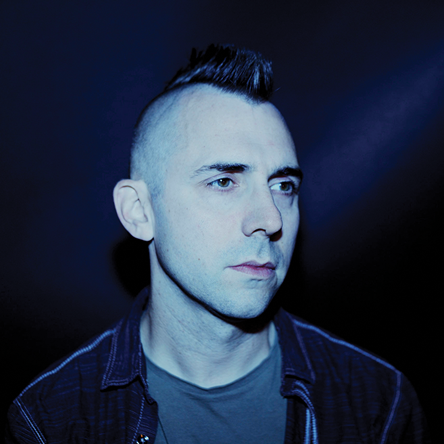
Experimental drummer Andrew Toy morphs the normal sound of a drumset through electronic augmentation and alteration. Channeling his drumset through the software Ableton Live, he triggers filters and effects, creating sound designs in real time for his work, “Armature.”
1:00 p.m. ADVOCATES
The third concert presents personal practice as an act of advocacy. This could be the advocacy of a certain composer, a certain work, or the nonmusical themes that such work engages with. In the act of advocacy, the performer identifies a certain value that they deem in other ways absent from mainstream discourse, and their performance becomes a type of assertion that others should take notice of this work.
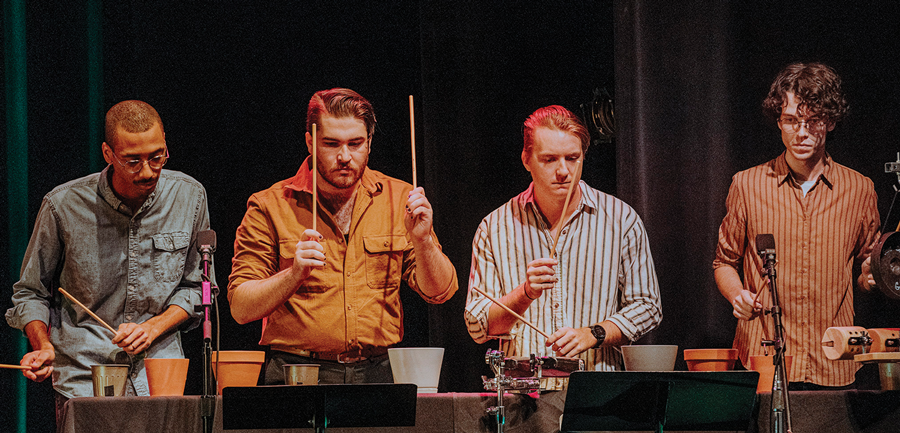
Up-and-coming quartet Matchstick Percussion performs a work commissioned by the group from composer Connie Li. “carry it (water)” is inspired by the composer’s experiences living in Baltimore working odd jobs. The themes of this piece are community, work, the resultant sounds from tasks, and ambiance of the urban environment.
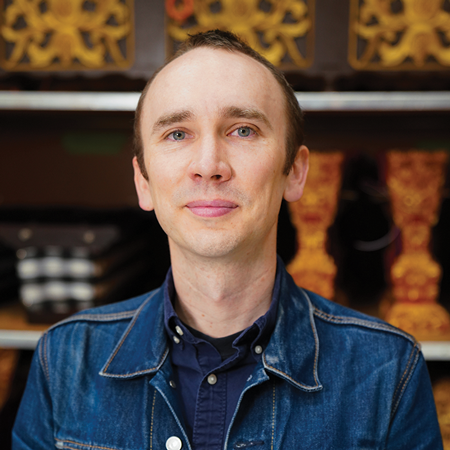
Gavin Ryan blends his expertise in Balinese gamelan and modular synthesis in a work by I Putu Tangkas Adi Hiranmayena. Part of a larger commissioning project of Balinese composers, “Kala Rame” is a semi-open instrumentation solo for four galeman instruments, four to eight guitar pedals, and eight different panggul or striking implements. The work depicts Bali’s lively and bustling atmosphere, as well as its spiritual demons that bring balance to the larger religious cosmos.
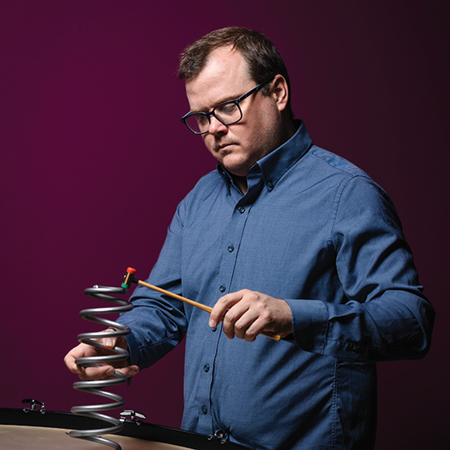
Ross Karre performs a work by his close collaborator Ash Fure for two bare subwoofer cones and percussive objects. After experimenting with many sounds in the opera The Force of Things, Karre and Fure met to develop and hone these inventive and unexpected techniques into a solo piece, “Shiver Lung II.”
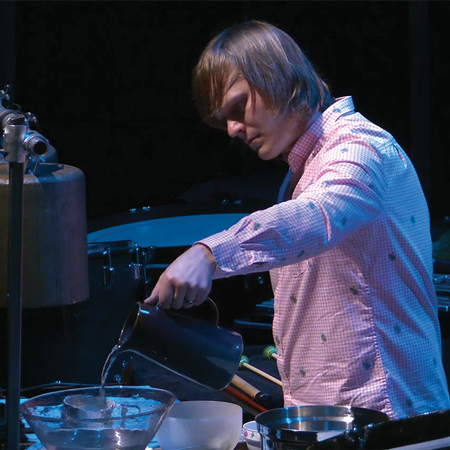
Christian Wolff, the last surviving member of the New York school of composers, will have his work “Exercise 32” performed by Mitchell Carlstrom. As a piece that can be performed in many formations and durations, it affords the performer(s) an opportunity to create something unique while still fulfilling the intentions of the composer.
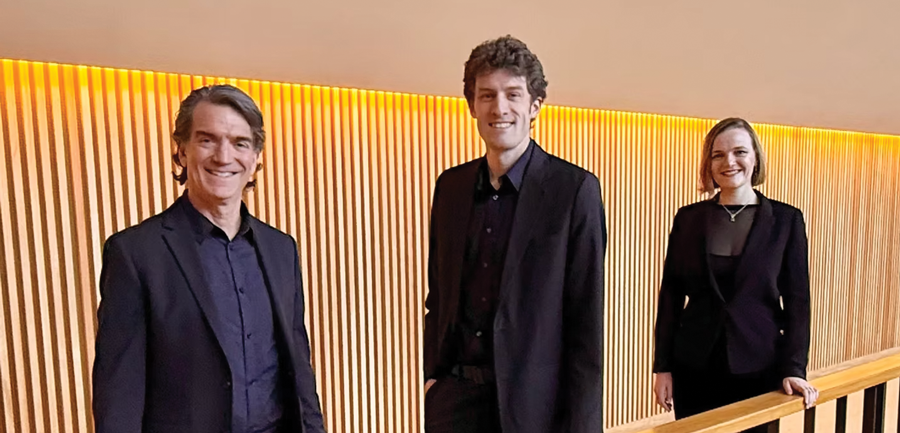
Chamber music trio F-PLUS (Josh Graham, percussion, Greg Oakes, clarinet, and Sally Woo, violin) closes out the third concert with a trio written by Irish composer Donnacha Dennehy. “Moire” focuses on the difficulties that many Irish citizens faced during “The Troubles” at the end of the 20th century.
3:00 p.m. CONVERSATIONS
Concert number four focuses on the personal relationships that emerge between peer composers and performers, and thus center long-term collaboration with a person or cultivation of their work. Many pieces that are now standard repertory began as conversations among friends or friends-to-be, and in some ways serve not only as notable cultural works but as punctuation points in the relationship between two specific people. This concert seeks to highlight the way collaboration begets friendship, and how both beget meaningful work.
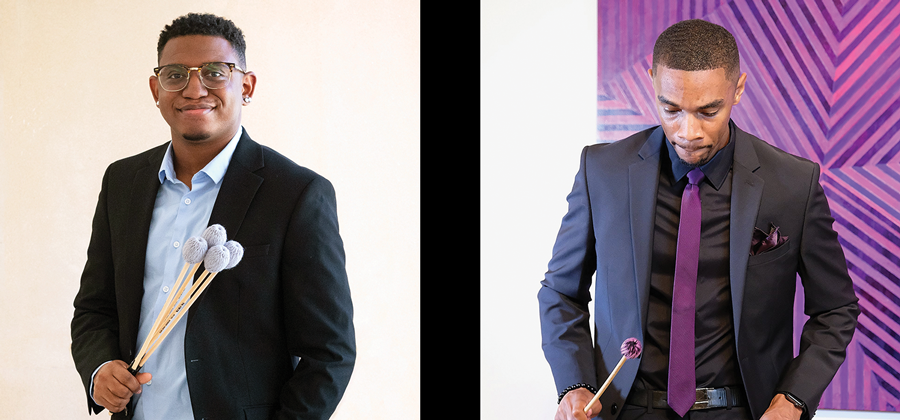
Ethan Strickland and Chris Thompson present “Critical”for spoken word and snare drum. A rhythmic tour-de-force for both snare drummer and rapper, Thompson’s composition explores “intersections between various genres such as classical music, hip-hop, soul, funk, and jazz music,” breaking down musical boundaries in order to “desegregate the musical styles.”
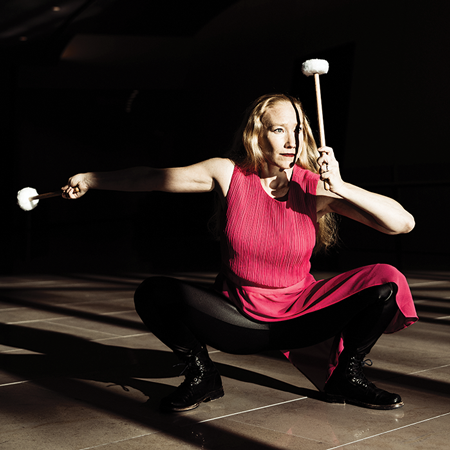
Bonnie Whiting performs excerpts from “Through the Eye(s),” a work co-composed by Whiting with Eliza Brown and nine musicians/writers incarcerated at the Indiana Women’s Prison: Whittney (CoCo) Bales-Malone, Ashley Strong, Marjorie Woods, Ingrid Swinford, Char’Dae Avery, LaDawn Johnson, Dawnetta Taylor (Shelton), Lara Campbell, Amaris Rose Bunyard, and Joyce (Potter) Hawkins. This team began from texts created by the participants, using found objects with the goal of allowing each person creative expression and the means to shape their own narratives.
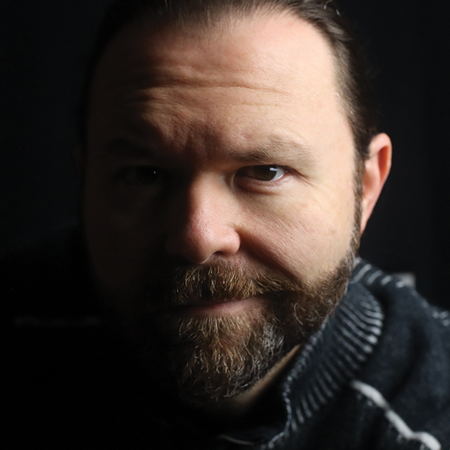
John Lane commissioned percussionist/composer Allen Otte as part of the larger project, TRIGGER: Artists Respond to Gun Violence. The resulting work, “A Drum is Not a Gun,”draws upon a long-standing collaborative project between Lane and Otte, who have both devoted decades of work to socio-political advocacy through art. The work, for speaking percussionist and snare drum, presents texts drawn from recent gun violence tragedies blended with poetry; the snare drum is played intimately, in the style of a frame drum, heightening the text throughout.
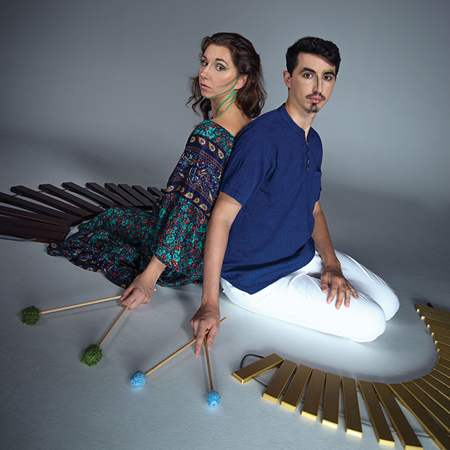
The Sauti Duo concludes this program, presenting works from their #Ecosophy project, “Discurso sobre la mirada (Discourse on the Gaze)” by Fran Barajas and “Change” by Alina Dzięciol, an interdisciplinary collaboration with several composers and artists that “reflects on environmental issues through music, incorporating elements of performance, audience participation, electronics, and theatricality.”
5:00 p.m. THE PERSONAL AS PATHWAY
The final concert centers on the concepts of stewardship and preservation. This might mean the stewardship of a particular tradition, a particular legacy, or the oeuvre of a composer or work that, without the championship of a performer(s), might be lost to history. This concert imagines the personal in percussion as an intergenerational affair: something that can be passed down, shared, or taken up, even if a thing’s “contemporary” moment might be antecedent to the lives of the artists who currently make a life out of it.
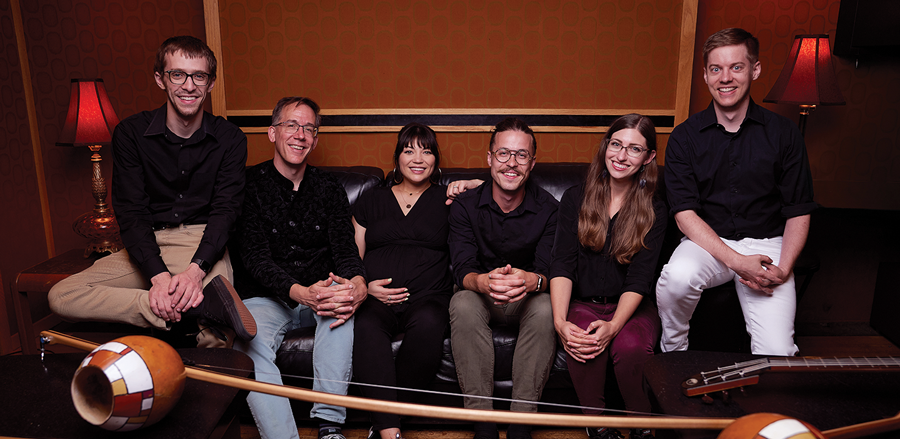
As a chamber ensemble performing the Brazilian single-stringed berimbau, Arcomusical spent years developing new and experimental work for this traditional instrument. Exploring new instrument designs, instrumental techniques, and musical genres, Arcomusical draws traditional music into conversation with modern composition. The group presents Gregory Beyer’s “Fios e linhas”and features tabla soloist Krissy Bergmark on her work, “Indra Looks to the Sky,” as examples of the group’s newly created repertoire.
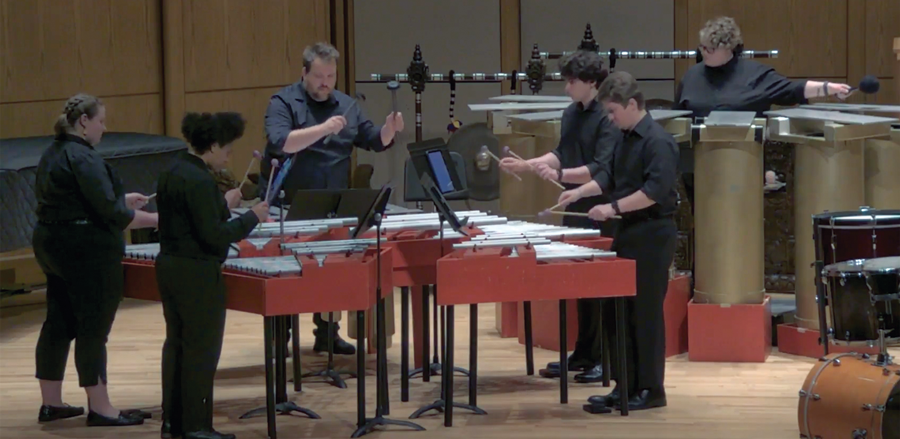
Performing on one of the last remaining copies of Lou Harrison’s American Gamelan, an invented set of percussion instruments tuned in just intonation, percussionists of Appalachian State University led by Brady Spitz present Richard Zare’s newly-composed “Infinity Room.”Harrison’s instruments were the result of an individual search for a personal percussive language; here Spitz and Zare extend Harrison’s individual voice into new expressions and new work.
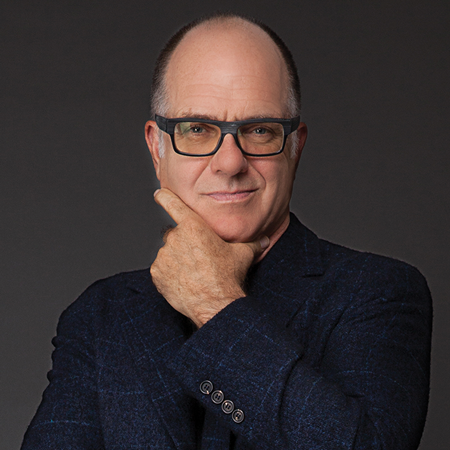
Steven Schick and pianist Cory Smythe conclude the day with a performance of Karlheinz Stockhausen’s groundbreaking work for percussion, piano, and fixed media, “Kontakte” (1960). First performing the work as a 21-year old student at the University of Iowa, questions stirred by “Kontakte”led Schick to a career of musical and creative exploration. This decades-long engagement represents the way any musician might inhabit and grow with the challenges and questions posed by a significant work. Schick writes, “Within our brief history as a contemporary art form, seeing ‘Kontakte’ as new and personal — not as settled repertory within an aging and impersonal canon — sustains its continuing vitality and allows it to shape the lives of its future performers.”