

PASIC 2026 Scholarly Research
PASIC 2026 Scholarly Research
by Quintin Mallette
Percussive Notes
Volume 64
No. 5
October
2026
The PASIC 2026 Scholarly Research Committee is hosting six impactful Scholarly Research Lightning Talks featuring both in-person and virtual presentations. These talks cover diverse topics including the cultural and historical study of the Capixaba Congo bands of Brazil, biomechanical research on metal double-bass drumming techniques to improve performance and reduce injury, the societal role and preservation of the marimba tradition in Costa Rica, innovative percussion pedagogy using a flipped classroom and technology integration, the experience of resonance in collaborative duet recordings, and the acoustical phenomena affecting timpani pitch stability. Together, these presentations offer meaningful insights that advance percussion teaching, learning, performance, and research by blending qualitative and quantitative approaches and fostering dialogue between researchers and practitioners.
The Scholarly Research Committee is excited to host six impactful and dynamic Scholarly Research Lightning Talks. Throughout PASIC 2026, our committee will feature four in-person and two virtual presentations offering a blend of qualitative and quantitative research, each of which offer meaningful implications for the way we teach, learn, and/or perform our craft as percussionists. Similar to previous conferences, each session will feature two concise (10–15 minute) presentations, followed by additional time for questions and discussion.
LIVE SESSIONS
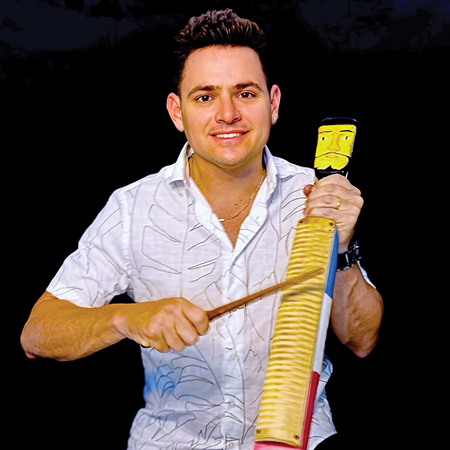
Daniel Lima
The Capixaba Congo: Rhythm, Instrumentation, and Tradition
This session investigates the Congo bands of Espírito Santo, also known as Capixaba Congo, through a qualitative approach. In his research, Daniel Lima looked at instrumental formations with a focus on the historical context, rhythmic cells, and development of musical notation for the drums and the casaca. In this talk, Lima will advocate for Congo bands as a hybrid cultural expression that integrates music, dance, and religiosity, resulting from historical processes of cultural interaction. Using an action-research methodology, this session will explain how the musical traditions of Congo bands are articulated and transformed over time in the territory of Espírito Santo. Within this area, more than 60 Congo bands were identified through documentary records and public and private archives as well as iconographic, sound, and audiovisual sources. Lima’s research aims to promote the appreciation of Capixaba Congo through performance practice, emphasizing rhythmic patterns, instrumental performance, and the collective transmission of musical knowledge. Ultimately, Lima argues for the preservation of Afro-Capixaba’s intangible cultural heritage, through strengthened dialogue between practitioners and researchers, and the creation of an audio/visual archive to support future research on Congo bands in Espírito Santo.
Daniel Lima is a Professor of Classical Percussion at Brazil’s Espírito Santo School of Music (FAMES), Principal Timpanist of the Bachiana Philharmonic Orchestra Sesi-SP, and a percussionist with the Espírito Santo Symphony Orchestra. He has appeared in international concerts in France, Germany, and the United States and has participated in several collaborative projects and recordings.
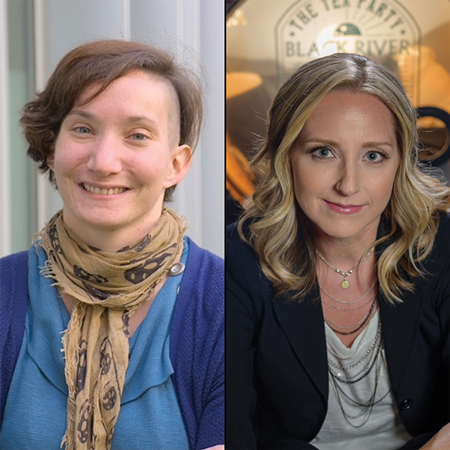
Drums Biomech
Metal Drummers Use Ankle Physiological Tremors to Speed Up Double Bass Drumming
In metal music, double-bass drumming pushes human movement to its limits. On behalf of the Drums Biomech team, Dr. Nadia Azar will discuss the resemblance between the ankle technique, often used in double-bass drumming, and physiological ankle tremor, a reflex-driven phenomenon well documented in neurophysiology. The research team was also interested in reports from drummers related to lower limb and back pain, raising concerns that sustained use of the ankle technique could contribute to musculoskeletal disorders (MSD). In their study, the researchers studied 18 experienced drummers to measure their lower limb and trunk positions, electrical activity in muscles related to pain and ankle flexion/extension, and assessed performance endurance to better understand the biomechanics of the ankle movement.
Their findings confirm that the ankle technique exploits a physiological tremor that drummers refine through training. Additionally, findings found that those who performed best in endurance had lower overall muscle activation, hinting at the acquisition of a more efficient technique leading the research team to note that compensatory muscle activation may increase MSD risk. The Drums Biomech team advocate for this work as a bridge between motor control research and real-world musical performance, providing evidence-based insights to refine technique, improve endurance, and reduce MSD risk.
Drums Biomech is a scientific exploration of one of the most extreme forms of human movement: high-speed double-bass drumming in metal music. They are a group of research scientists, primarily from Nantes Université (France) and the University of Windsor (Canada). The study was carried out by Dr. Aurélie Sarcher at the MIP (Motricité, Interactions, Performance) at Nantes Université (France), a renowned interdisciplinary laboratory specializing in human movement science and performance. The project will be presented on behalf of the research team by Dr. Nadia Azar, Associate Professor of Kinesiology and founder of the Drummer Mechanics and Ergonomics Research Laboratory (DRUMMER Lab) at the University of Windsor (Canada), a pioneer in the study of the biomechanics and ergonomics of drumming performance.
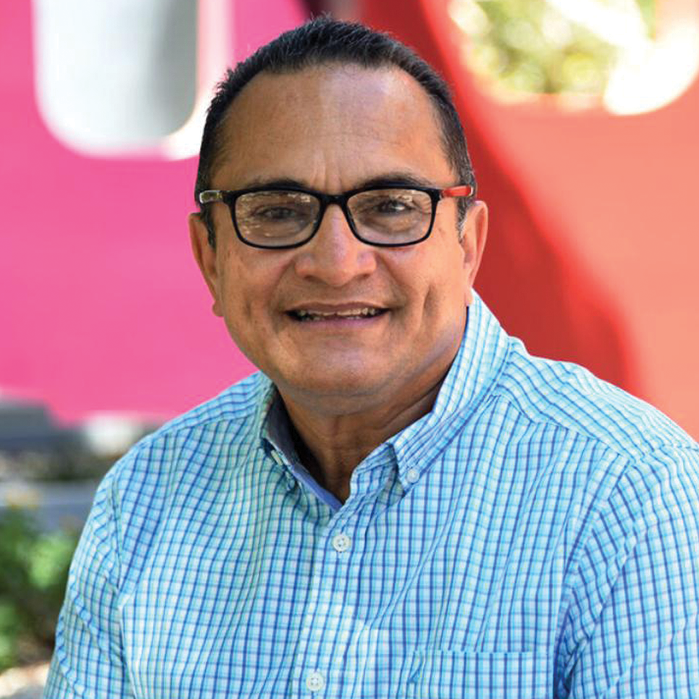
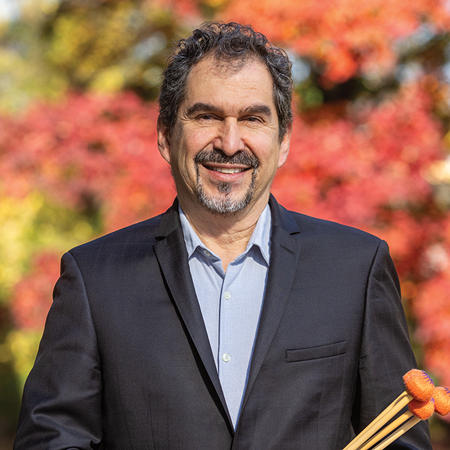
Fernando A. Meza and Raziel Acevedo
The Marimbas of Costa Rica
In their presentation, Fernando A. Meza and Raziel Acevedo examine the societal role of the traditional marimba in Costa Rica. Through over two decades of research, the pair has identified important imprimaturs in Costa Rican musical culture, including unifying elements of Mesoamerican and African ancestry, as well as uniquely Costa Rican elements. Their study traces the development of the “marimba de arco” and diatonic instruments through the modern usage of the chromatic marimba by way of the Guatemalan instrument in the earlier part of the 20th century. Their research uncovers the ways in which professional and amateur musicians, alongside instrument builders in Costa Rica, preserve the marimba tradition as an integral part of their fabric of life. They highlight the prevalence of community involvement in preserving this cultural representation through festivals, public presentations, and the creation of an official school for young students (University of Costa Rica – Escuela de Etapa Básica), and a “marimba forest” in the city of Santa Cruz, to create an ecologically balanced environment, where materials needed for instruments and mallets can be harvested responsibly. This session will advocate for the importance of the marimba within Costa Rican culture, to provide a deeper understanding of its roots, history, and impact within the country.
Fernando A. Meza is Professor of Music and Chair of Percussion Studies at the University of Minnesota School of Music in Minneapolis, Minnesota. Raziel Acevedo is Professor of Music in the Pre-University Program of Musical Arts at the University of Costa Rica in Santa Cruz, Guanacaste.
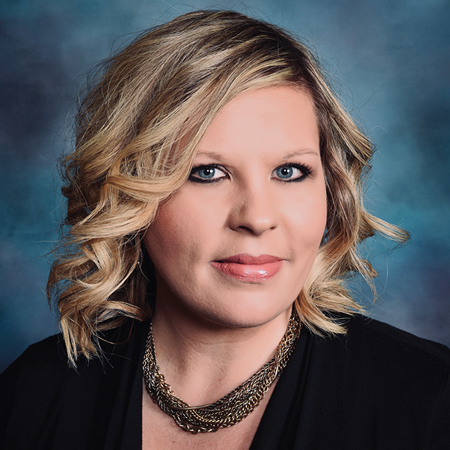
Dr. Kandis Taylor
Preparing Music Education Undergraduates to Teach Percussion Using a TPACK and Flipped Classroom Curricular Framework
In this session, Dr. Kandis Taylor addresses the challenge of limited time allotted to instrumental pedagogy in music teacher education. She finds that undergraduates often feel underprepared to teach the vast array of instruments required for public school instruction, with percussion pedagogy frequently feeling the most daunting due to its diversity of instruments and techniques. Taylor explores a curricular framework combining the flipped classroom model with the Technological Pedagogical and Content Knowledge (TPACK) framework. In this study, Taylor shifted the focus of in-person sessions toward high-impact, hands-on percussion instruction and peer teaching through moving foundational instruction, such as method-book readings and video tutorials, outside of the classroom. Central to this study, Taylor enacts a TPACK Video Assignment series, where students recorded themselves teaching specific percussion concepts (e.g., stick grip, buzz rolls, and note reading on pitched percussion) while integrating digital tools. Findings suggest that this model significantly enhances technological musicianship, with participants reporting that recording instructional videos encouraged them to refine their percussion techniques and pedagogical delivery. The use of the flipped classroom model addressed the lack-of-time deficit inherent in semester-long courses and allowed for more intensive laboratory time. Taylor proposes that by utilizing percussion as the primary vehicle for tech integration, students can develop the adaptability needed for 21st-century classrooms, where she advocates for the use of this systematic model to maximize contact time and ensure that young teachers are both technically proficient and technologically capable.
Dr. Kandis Taylor is Percussion Instructor and Director of the Panoramic Steel Drum Band at Brigham Young University, Director of Percussion Studies at Mt. View High School, and Director of Bands at Lakeridge Junior High School. She has over 20 years of experience teaching, directing, and adjudicating junior high and high school concert bands, jazz bands, and percussion ensembles in California and Utah. Her research interests focus on leveraging educational technology as a tool for music learning, and she has presented at professional conferences both nationally and internationally.
VIRTUAL SESSIONS
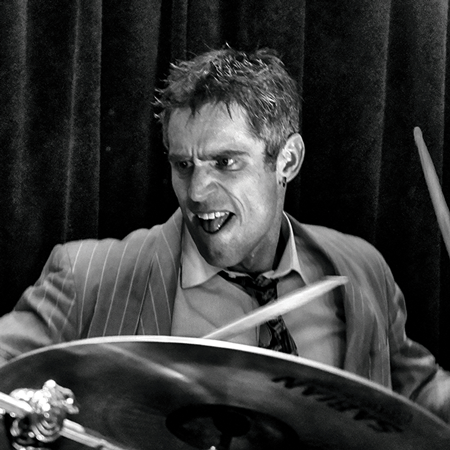
Dr. Gareth Dylan Smith-Lee
Resonance and Practical Musicology in Recording a Duets Album from the Drums
In this presentation, Dr. Gareth Dylan Smith-Lee reports on a practical musicology project investigating the extent to which he and collaborators sought or experienced resonance during the creation of an album of improvised and pre-composed duets. This album involved 14 musicians who contributed through rap, spoken word, tin whistle, piano, violin, hand percussion, singing, electronics, saxophone, iPad, and bass in service to a total of 19 tracks of music. Smith-Lee’s focus on resonance is grounded in Hartmut Rosa’s (2016) sociological theory of resonance and was collected using autoethnography as well as semi-structured interviews with co-participants. Responses from Smith-Lee and collaborators covered the gamut of resonant experience, with several musicians (including the presenter) experiencing profound personal transformation. In addition to a presentation of findings, this virtual session will include audio and video of resonant duet performance.
Dr. Gareth Dylan Smith-Lee is a drummer and Assistant Professor of Music at Boston University. He is a member of the PAS Scholarly Research Committee and is widely published in peer-reviewed journals and books across musicology and music education. Alongside his scholarly activity, Smith-Lee has performed and recorded internationally with musical theatre, punk, and alternative rock bands, and with classical pianist Austina Lee.
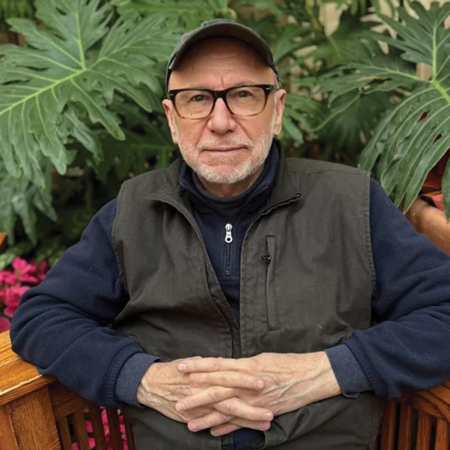
Richard K. Jones
Mr. Duff’s Visits with Schrödinger’s Cat and the Complementary Degenerate
In this session, Richard K. Jones, builds on his August 2026 Percussive Notes article, “Listening Between the Lugs,” where he brings attention to the familiar timpani problem of a drum being in tune and correctly tensioned at the lugs, yet the resulting pitch remains unsettled. Jones aligns this timpani problem with the acoustical phenomenon of mode splitting, where the circular timpani head supports paired versions of the same modal behavior in different orientations resulting in shared tension pairs (STP) around the drum. He further notes that when a drum is well balanced, these partners remain close and the ear hears a stable pitch center; however when tension, seating, friction, counterhoop fit, or other boundary conditions favor one direction, the pair can separate in frequency resulting in shimmer, beating, “wah-wah” effect, roughness, or a false clear. Jones argues for the connection between Cloyd Duff’s primary and secondary clearing process, shimmer, STPs, and mode-splitting awareness in a way that supports a more reliable, centered timpani sound without replacing the player’s ear.
Richard K. Jones is a retired educator and professional timpanist with over five decades of experience in higher education and orchestral performance. He served on the faculty of Nebraska Wesleyan University and performed for more than four decades as Principal Timpanist with the Lincoln Symphony Orchestra and Assistant Principal Timpanist with the Omaha Symphony Orchestra. He is the author of two timpani WEBooks: The Well-Tempered Timpani and The Quantum World of Timpani Pitch.
Quintin Mallette is Chair of the PAS Scholarly Research Committee and Assistant Professor of Percussion at East Carolina University. His research focuses on assessment and performance studies.